Business 3 min read
Too Much AI Is Becoming Frustrating
Too Much AI Is Becoming Frustrating — And Nobody Is Saying It Out Loud
AI is everywhere.
In your inbox.
In your meetings.
In your tools.
In your notifications.
What was once exciting is now, for many professionals, overwhelming.
Every product claims to be “AI-powered.” Every update promises “smarter automation.” Every workflow now has an assistant, a copilot, or an agent. Yet productivity has not improved at the same pace as the noise.
The uncomfortable truth is this: we don’t have an AI shortage — we have an AI overload problem.
The Rise of AI Fatigue
AI fatigue doesn’t come from fear of technology. It comes from poor implementation.
Too many AI systems:
Interrupt instead of assist
Generate content without context
Add dashboards instead of removing work
Demand attention instead of saving time
Instead of simplifying workflows, they introduce new cognitive overhead. Users now spend time validating AI outputs, switching between tools, and cleaning up automated mistakes.
AI was supposed to reduce friction. In many cases, it has simply shifted it.
When AI Becomes Noise Instead of Value
The problem is not AI itself. The problem is AI without purpose.
We are seeing a pattern:
AI features built for marketing, not users
Automation added where judgment is required
Intelligence layered on top of broken processes
This creates a paradox:
The smarter the system claims to be, the more effort users must spend managing it.
At that point, AI is no longer a tool. It becomes another system to babysit.
The Difference Between Helpful AI and Frustrating AI
Good AI is almost invisible.
You don’t “use” it.
You benefit from it.
Effective AI:
Works in the background
Reduces decisions, not adds them
Delivers outcomes, not outputs
Integrates into existing workflows
Bad AI demands attention. Good AI gives time back.
Outcome-Driven AI Is the Only AI That Scales
The future of AI will not be defined by how advanced the model is, but by how little effort it requires from the user.
People don’t want:
More summaries
More suggestions
More generated content
They want:
Clear decisions
Clear ownership
Clear next steps
AI should not ask, “What do you want me to do?”
It should already know — based on context.
Less AI. Better AI.
The next wave of successful AI products will not be louder.
They will be quieter.
They will remove steps, reduce follow-ups, and eliminate busywork.
They will focus on execution, not experimentation.
In a world flooded with AI, the real differentiator will be restraint.
Because the best AI doesn’t remind you it exists.
It simply makes work easier — and then gets out of the way.
In a world saturated with AI, simplicity becomes the competitive advantage.
A Quiet Example of Where AI Is Actually Working
Some platforms are beginning to apply AI with this mindset—focusing less on generating content and more on ensuring outcomes.
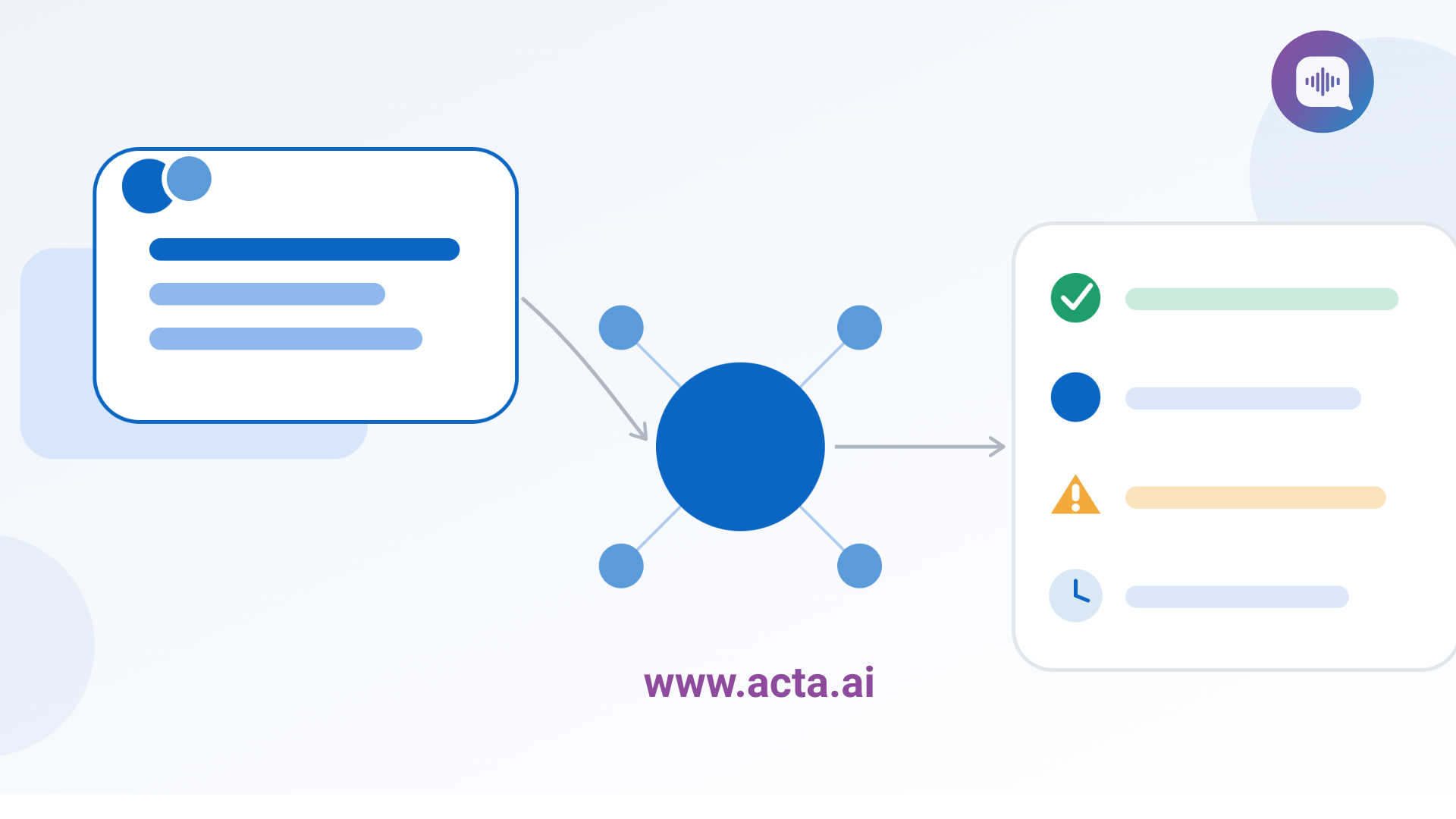
For example, in the meeting productivity space, a few tools (www.acta.ai) are moving beyond note-taking to ensure discussions translate into clear actions, ownership, and follow-ups—without adding extra work for teams. When AI helps conversations turn into execution automatically, it feels less like “more AI” and more like less work.
That difference matters.
Final Thought
AI is not the problem.
Unfocused AI is.
The future belongs to AI that does less—but does it exceptionally well.
Because the most valuable AI is the one you don’t notice—
you just notice the results.