Business 4 min read
The Future of Enterprise Meetings
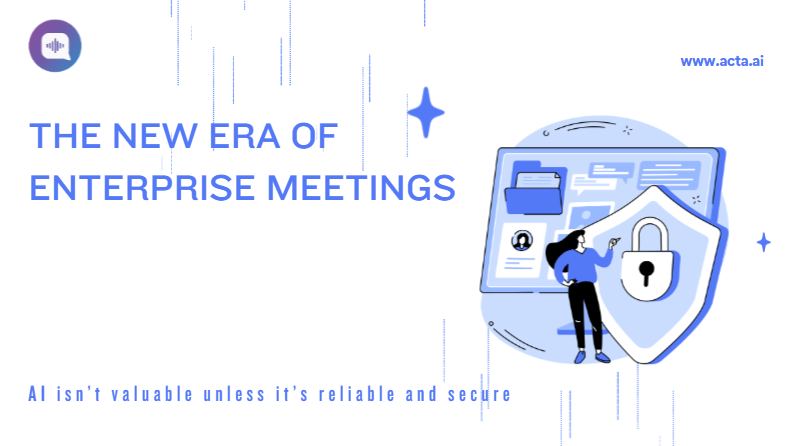
Generative AI is transforming how organizations work, collaborate, and make decisions. But inside the enterprise, innovation has a different rhythm — privacy matters, trust matters, and reliability matters. At Acta, we’ve spent the last two years building an AI meeting intelligence platform that doesn’t just take notes — it understands context, extracts decisions, and orchestrates workflows.
Along the way, we discovered that building an enterprise-grade AI note-taker requires solving three core challenges: trust, explainability, and integration. And as the market evolves with agentic AI and multimodal intelligence, the space is becoming more competitive and more exciting than ever before.
This article brings together the real challenges, the fastest-growing trends, and a clear competitive landscape—with one message: Acta isn’t just participating in this space. We’re defining it.
1. The Real Challenges of Bringing Generative AI Into the Enterprise
Most people assume that deploying an AI note-taker is easy: record, transcribe, summarize. In reality, enterprises expect something far more robust — and far more responsible.
A. Trust Before Transformation
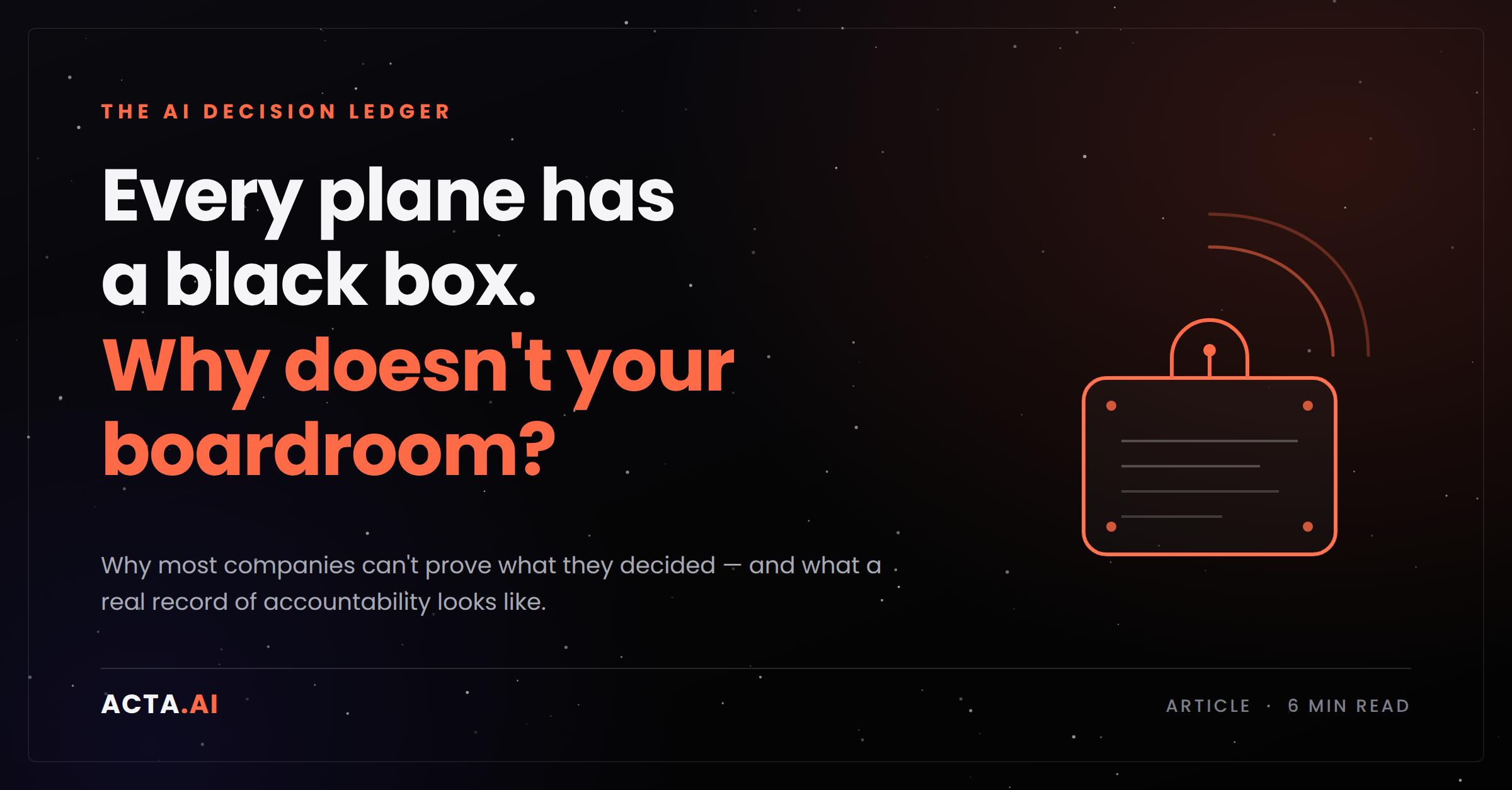
When confidential meetings are being summarized, leaders don’t want a black box. They need to know:
Why did the AI pick this as the key decision?
How was this action inferred?
Where is the data stored?
At Acta, we designed our system so every insight is traceable.
B. Data Privacy Isn’t a Feature; It’s a Deal-Breaker
Enterprises were hesitant to send sensitive conversations and internal strategies into third-party AI models. So we built a hybrid inference architecture:
Sensitive text stays on the customer’s secure environment
Generative summarization runs in controlled, compliant layers
This ensures security without compromising the power of LLMs.
C. Reliability Is Everything
In productivity tools, “mostly accurate” is acceptable. In enterprise meetings, it’s unacceptable.
Acta uses:
Prompt audits to catch inconsistencies
Deterministic fallback layers when the model is unsure
Human-in-loop frameworks for validation
This is how we deliver summaries that teams can actually trust.
D. Integration Determines Adoption
Even the best AI fails if it doesn’t fit into existing workflows.
That’s why Acta.ai integrates deeply with:
Zoom
Google Meet
Microsoft Teams
Jira
Slack
CRMs
Confluence / Notion
Salesforce
Zoho
HubSpot
Our philosophy: AI should work where your team works — not force new behavior.
2. The Emerging Trends Shaping AI Note-Takers in 2025
The AI meeting assistant space is evolving faster than ever. Here are the top trends shaping the future — and why they matter.
Trend 1: Rise of Agentic Meeting Assistants
AI note-takers are moving from passive transcription to active participation.
New systems can:
Ask clarifying questions
Suggest next steps
Create tickets or tasks automatically
Even speak during meetings when prompted
Acta is leading this shift with persona-driven agents (Product Agent, Sales Agent, HR Agent, Support Agent) designed for real enterprise workflows.
Trend 2: Privacy-First & Hybrid AI Architectures
Large companies want powerful AI without sacrificing control. Hybrid models — like Acta already uses — are becoming the enterprise standard.
This solves the biggest adoption barrier: "Who can see my meeting?"
Trend 3: Personalized, Role-Based Summaries
Summaries are no longer “one-size-fits-all.” Different roles want different insights.
Acta uses context modeling to deliver:
Decisions for leaders
Tasks for contributors
Risks for project managers
Follow-ups for sales
This increases relevance — and repeat usage.
3. Competitive Landscape — And Where Acta.ai Leads
The space is crowded with strong players:
Otter.ai
Real-time transcription, summaries
Voice-activated meeting agent
Broad integrations
Fireflies.ai
Great cross-platform support
CRM integrations
Searchable meeting intelligence
Fathom
Fast client call summaries
Sales-focused follow-up tools
Avoma
Conversation intelligence
Coaching insights
Sembly / Notta / Notion AI
Good summaries, integrations, and workspace alignment
How Acta.ai Stands Apart
1. Persona-Driven AI Agents
Instead of one generic assistant, Acta provides role-based intelligence (Product, Sales, HR, Support) — a major differentiator.
2. Enterprise-Grade Privacy with Hybrid Inference
Most competitors are 100% cloud-based. Acta wins enterprise trust with privacy-by-design architecture by providing on-premise deployment.
3. Workflow Automation, Not Just Notes
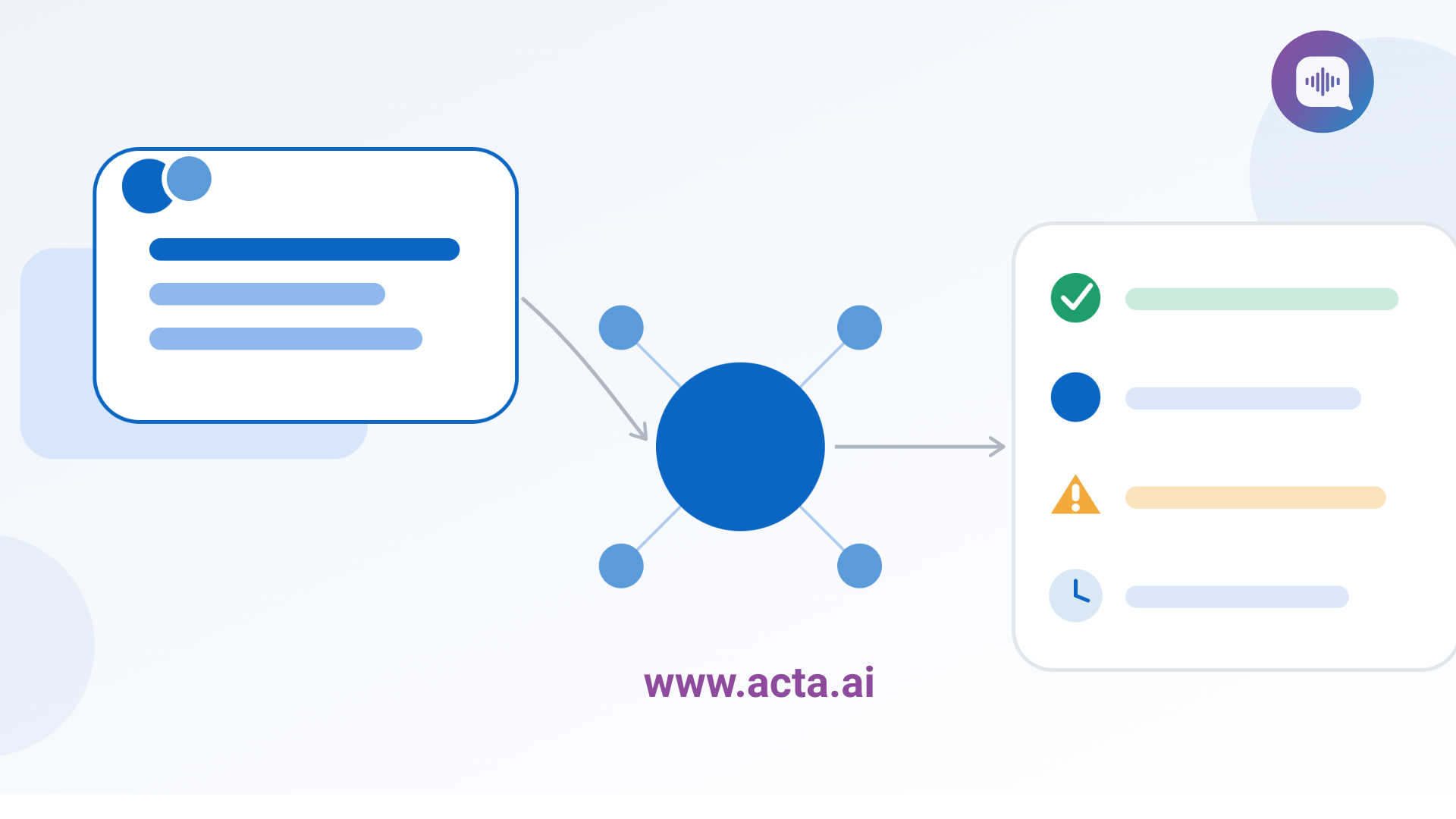
We don’t stop at summaries. Acta automatically:
Creates Jira tickets
Updates project boards
Sends follow-ups
Tracks decisions
Orchestrates workflows
4. Multimodal Roadmap (Where the Market Is Heading)
Visual understanding + screen context = the next big opportunity. Acta is designing for that future.
5. High Reliability Through Safety Layers
Fallback logic + audits + governance = enterprise-grade accuracy and trust.
The Acta.ai Advantage: Trust, Intelligence, Action
The AI note-taker market is exploding, but the winners won’t be those who summarize faster. They’ll be the ones who:
Understand enterprise complexity
Respect data boundaries
Build trust through transparency
Integrate into real workflows
Deliver decisions, not just documents
At Acta.ai, we’re building the next generation of meeting intelligence — AI that doesn’t just record meetings, but understands them, learns from them, and drives work forward.
Because in the enterprise world, AI isn’t valuable unless it’s reliable, secure, and deeply actionable.